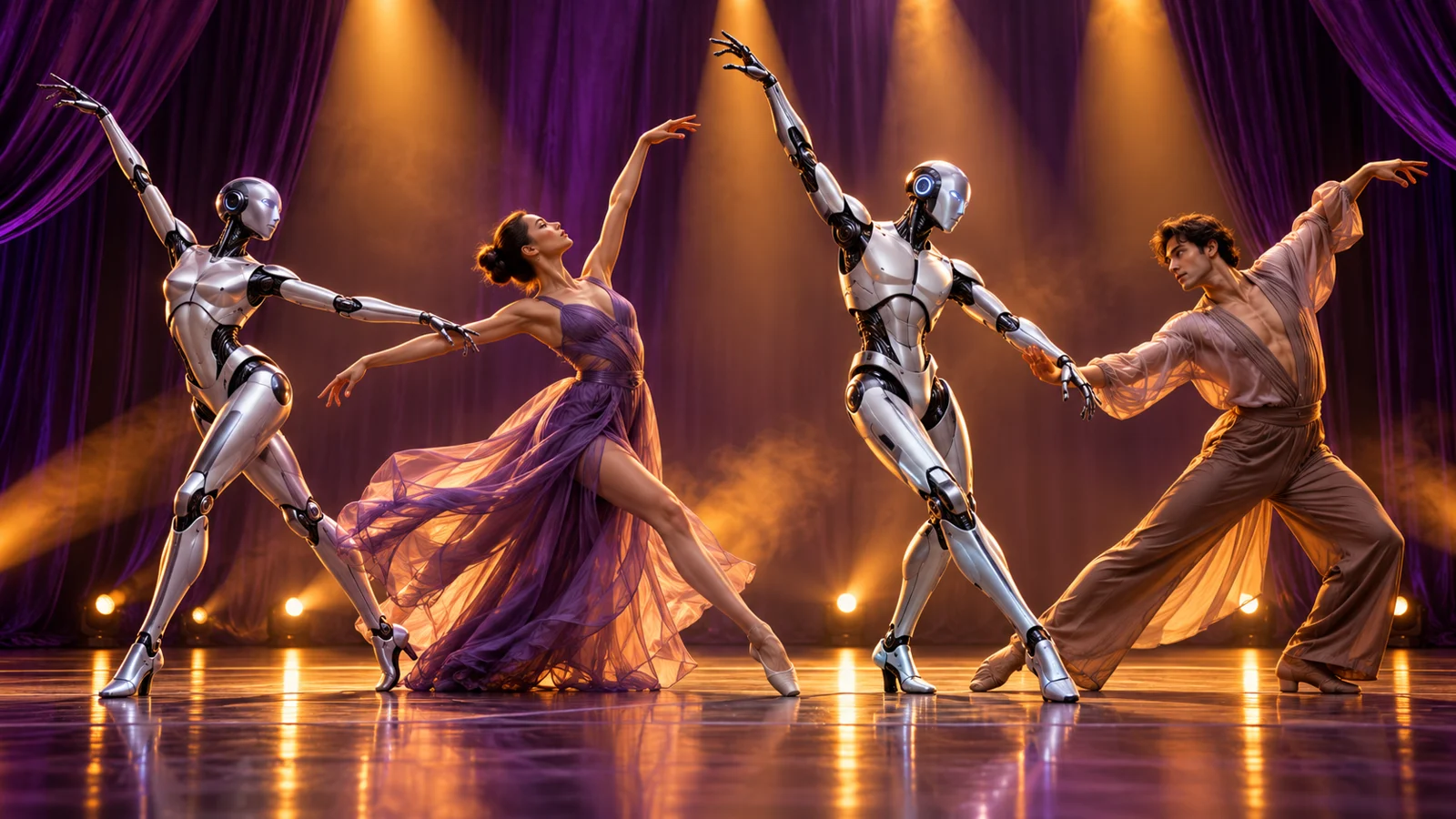
Twenty full-size humanoid robots performed alongside 120 young dancers at the opening of WorldSkills Shanghai on September 22, 2026, according to the event organizer. The ceremony took place at the Shanghai World Expo Cultural Centre. One machine also demonstrated intricate finger movements using dexterous hands.
WorldSkills described the coordinated routine as a world first. That description belongs to the organizer; NEURA has not independently established a global record. The verified news is the staged collaboration between human performers and machines at a major celebration of vocational skills.
What the performance tells us
A synchronized routine is an accessible way to show movement control. An audience can immediately recognize timing, balance and whether a machine appears to keep pace with a human partner. Those visible qualities help explain why robotics demonstrations travel so quickly through social media.
They also leave technical questions unanswered. A video alone cannot establish how the movements were generated, how much rehearsal was needed, whether an operator intervened or how a robot would respond to an unexpected obstacle. Those questions require documentation and testing beyond a polished performance.
NEURA analysis: the next useful evidence
For a humanoid intended to work around people, repeatability matters as much as a successful appearance. Useful evidence would include many uninterrupted trials, recovery after a mistake and a clear account of the conditions under which the robot can operate safely. A single routine cannot supply that evidence.
The setting also deserves attention. Vocational training involves the people who install, maintain, repair and supervise technology. Robots on a stage can invite discussion about those occupations, but they do not establish that the machines can take over the work demonstrated across a skills competition.
The performance is compelling as choreography and public communication. Its longer-term importance will depend on whether comparable coordination carries into less predictable environments, with transparent measures of reliability. That is the distinction to keep in mind when the next short robot clip appears in a feed.
Cover: AI-generated conceptual illustration; not a photograph of the ceremony.